Need black mold removal in Eugene?
Questions about mold in your home? Call or email info@moldremovaleugene.com, and tell us what you are seeing. There is no obligation to hire anyone.
No obligation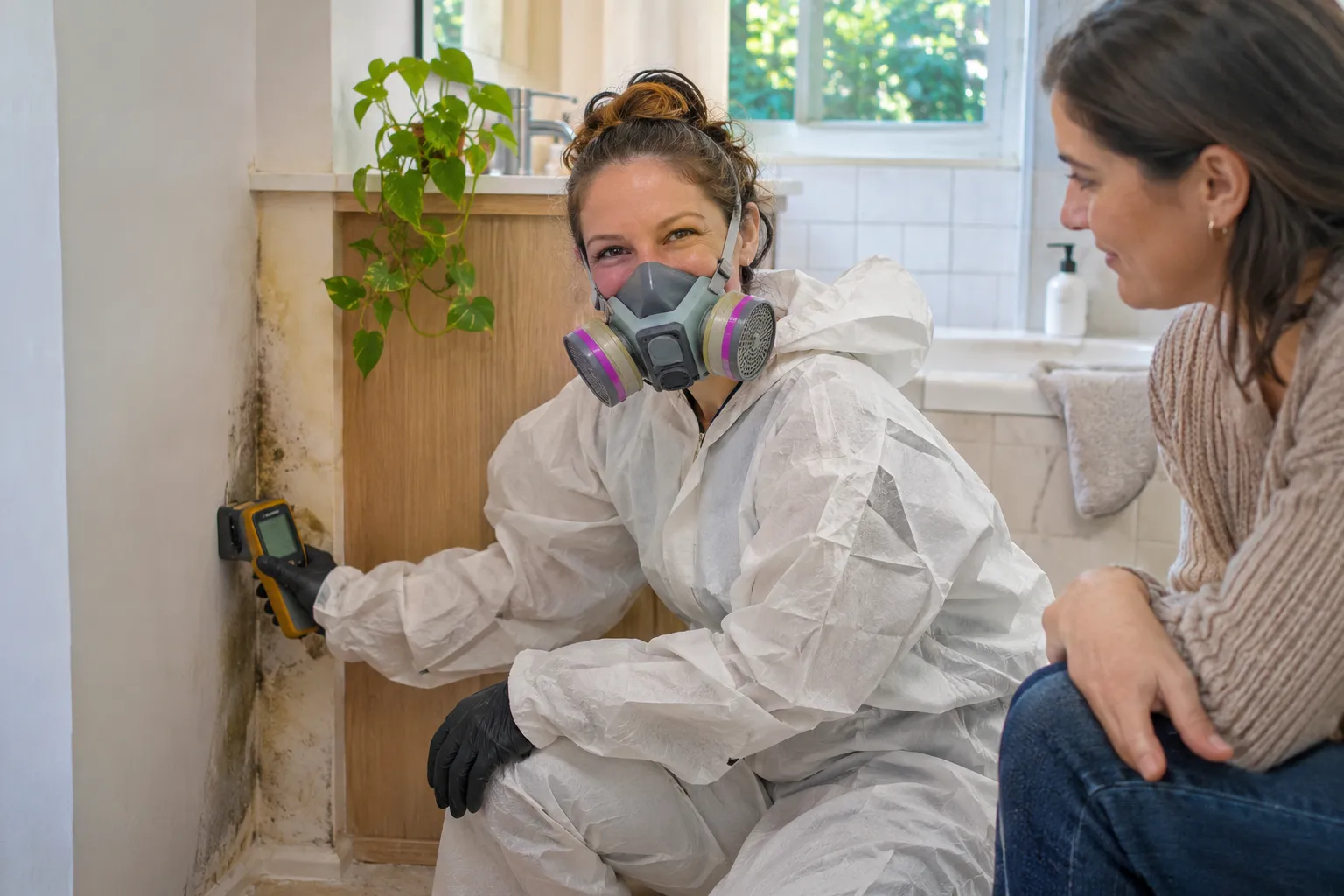
Request an estimate for black mold
Spotted dark, fuzzy patches on a wall or under a sink? You are not alone, and it is fixable. Eugene Mold Removal is a referral service. We connect homeowners in Eugene and the Eugene area with independent providers who handle black mold removal.
The provider checks the area, finds the moisture feeding the growth, and explains the plan in plain words. Then they contain the space, remove the mold, and help you dry things out. Fix it, keep it dry. Our pages also share simple habits that help keep mold from returning, which matters in a region with a long wet season.
See dark spots and feel worried? Take a breath. Most cases are manageable when a trained provider handles them.
First, leave the area alone. Do not scrub, sand or spray it. Disturbing mold can send spores into the air and spread them to other rooms. Close the door if you can, and keep kids and pets out.
Call (541) 579-2091 to check provider availability and talk through what you are seeing.
Color alone does not tell you. Many molds look dark green, gray or black. The kind often called black mold is one species, and only testing can name it.
The good news is that the plan is much the same either way. Any widespread mold in a living space should be removed by someone with the right gear and containment.
It likes damp, still places. In wood-frame homes in a wet climate, these are the usual spots:
Older craftsman houses can hold moisture in old siding and framing. Newer townhomes can trap humidity when the air does not move well.
It seems like a quick fix, right? Bleach can lighten the stain on a hard surface. On wood and drywall, it often does not reach the roots that grow inside the material.
The stain fades, the moisture stays, and the mold returns. Mixing cleaners can also make dangerous fumes. A provider uses methods made for porous materials and keeps the work contained.
Wondering what the work involves? Here is the usual flow, though each provider has its own process.
Small jobs may take a day or two. Larger ones with removed drywall or framing take longer.
Call for availability (541) 579-2091
Often, yes. Busy households can ask the provider to plan around life. That might mean working while kids are at school, or sealing off one room so the rest of the home stays usable.
If the job is large, a provider may suggest staying elsewhere for a short time. Ask early so you can plan.
Only if the moisture does. This is the part many people skip. Removing mold without fixing the water source is like mopping while the tap runs.
Ask the provider to help find the moisture. Common causes are a slow plumbing leak, a roof or flashing problem, poor drainage, or a wet crawl space.
After the repair, small habits protect your work.
A small humidity meter costs little and gives you a clear number to watch.
Hard items like glass, metal and plastic can usually be cleaned. Porous items such as carpet, upholstery and cardboard are harder to save. Ask the provider what can be cleaned and what should go.
Take photos before anything is moved. Providers can often help document damage for a claim, and some policies may cover sudden damage, so check your policy.
Not always. Some providers test before removal, and some go straight to the work if the problem is plain to see. Ask what they recommend and why. Testing can help when the source or type is unclear.
Good questions make for a smooth job. Try these:
A clear provider will answer without fuss.
You do not have to figure this out alone. Call and tell us about the problem, and a local provider can walk you through the plan.
Call to ask about an estimate, with no obligation.
Call for availability (541) 579-2091
The provider looks for the leak or damp spot that is feeding the growth.
Plastic barriers and air filtration help keep spores from drifting into the rest of your home.
Damaged drywall, insulation or wood is bagged and taken out, and surfaces are cleaned.
Fans and dehumidifiers dry the space, and the provider explains how to keep it dry.
Prices vary a lot by size, access and materials. These are typical U.S. ranges, not quotes. Ask the provider for a written quote that lists exactly what is included.
| Item | Typical range | Notes |
|---|---|---|
| Small area removal | $500 – $1,500 | One spot, such as a bathroom corner |
| Larger room removal | $1,500 – $4,000 | Depends on how far it has spread |
| Crawl space or attic work | $2,000 – $7,000 | Access and size change the price |
| Drywall or insulation replacement | $500 – $3,000 | Only if materials are too damaged |
| Mold testing | $300 – $1,000 | Air or surface samples with lab results |
| Moisture repair | $200 – $5,000+ | Ranges from a pipe fix to drainage work |
Call for availability (541) 579-2091
Call (541) 579-2091 and share a few details about where the mold is.
We connect you with an independent provider in our network who serves your area.
The provider looks at the space and explains the plan, timing and price.
The provider does the work and shares simple habits to help keep moisture away afterward.
Tell us about your home once and we point you to independent providers nearby.
We explain the steps in simple words so you know what to ask before work starts.
Our pages cover the upkeep after repairs, so the problem is less likely to return.
Ask providers about scheduling around work, school and family routines to keep disruption low.
Questions about mold in your home? Call or email info@moldremovaleugene.com, and tell us what you are seeing. There is no obligation to hire anyone.
No obligationSome people notice coughing, irritated eyes or stuffy noses around mold, especially children, older adults and anyone with asthma. Avoid disturbing it and talk with a local provider about safe removal. Ask a doctor about health concerns.
A very small patch on a hard surface may be something you can clean with care and protective gear. Larger or hidden growth is better left to a provider, since scrubbing can spread spores through the home.
It depends on your policy and the cause. Some policies may cover mold that follows sudden damage, such as a burst pipe, but often not long-term leaks. Check your policy, and ask the provider to help document the damage.
Questions about mold in your home? Call or email info@moldremovaleugene.com, and tell us what you are seeing. There is no obligation to hire anyone.
No obligationSpeak with a provider in your area
One call puts you through to an independent local provider who can talk through your project.
Call for availability (541) 579-2091
No obligation