Need mold inspection and testing in Eugene?
Questions about mold in your home? Call or email info@moldremovaleugene.com, and tell us what you are seeing. There is no obligation to hire anyone.
No obligation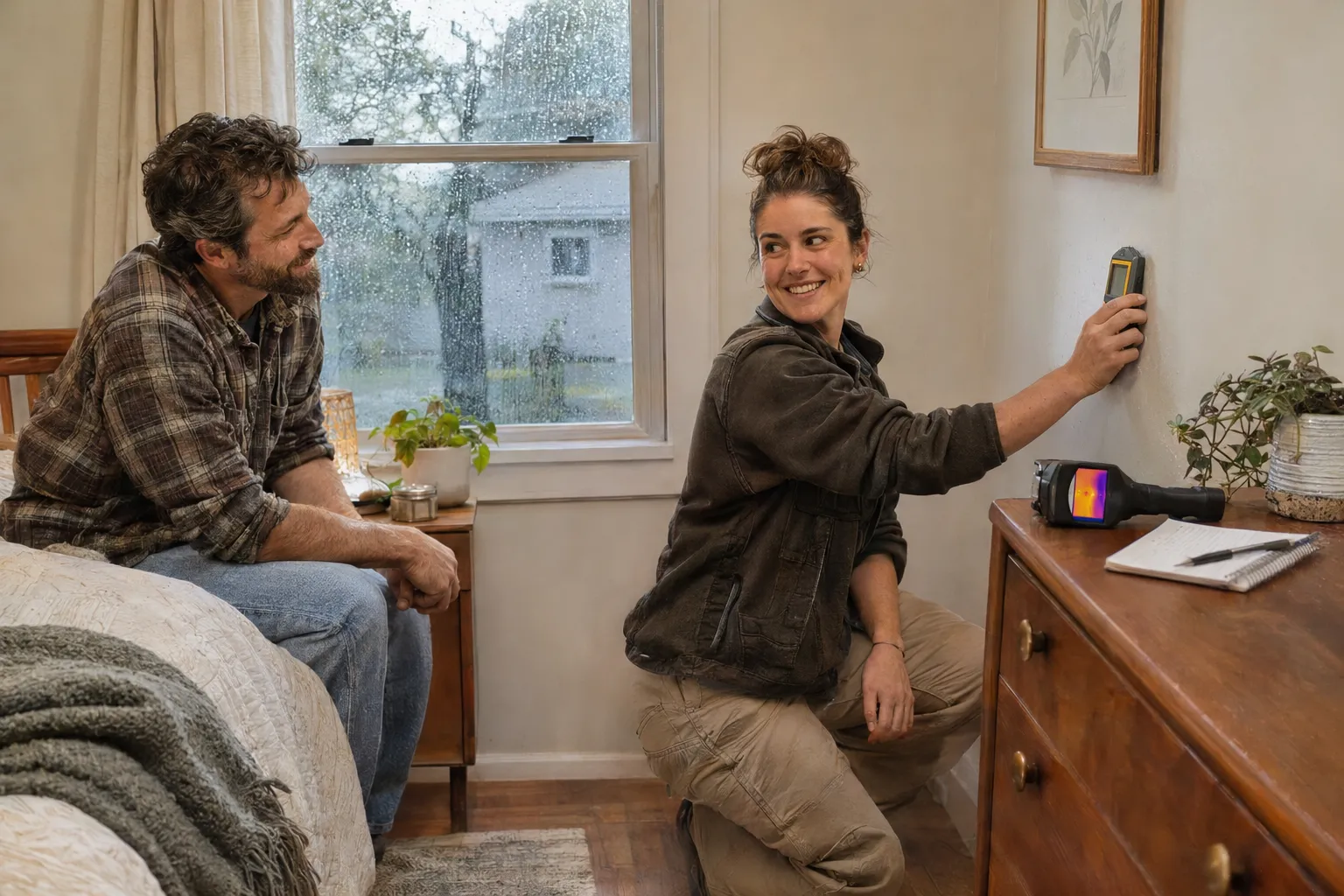
Request an estimate for your home
Not sure if that musty smell or dark stain is mold? A mold inspection answers the question. A provider in our network checks the visible spots and the hidden ones, like crawl spaces, attics and wall cavities. Testing adds lab results when you need them.
Eugene Mold Removal is a referral service. We connect homeowners in Eugene and the Eugene area with independent providers who do the inspecting and testing. The provider explains what they find in plain words, shows you where the moisture is coming from, and tells you what a sensible next step looks like. You decide what happens after that.
A musty smell, a stain that keeps returning, or paint bubbling by a window can all be clues. They may point to mold. They may also point to plain dampness. An inspection sorts out which one you have, so you can stop guessing.
If you can see growth spreading, or someone in the home is coughing more than usual, treat it as a priority. Reach out to a provider this week.
Wondering if yours is one of them? These are the common reasons homeowners book a visit:
Long wet seasons keep crawl spaces and wall cavities damp for months. Wood-frame homes and older craftsman houses often hide moisture where you cannot see it.
What will the provider actually do? Most visits follow the same path. The provider asks about the history of the home, walks each room, and looks closely at ceilings, corners, windows and under sinks. Then they check the places that stay hidden, like the attic, the crawl space and the area around the water heater.
Many providers use a moisture meter and a thermal camera. These tools find wet spots behind walls without cutting into them. Find the moisture, and you have found the reason mold grew.
Expect a couple of hours for an average house, and longer for a large one with a crawl space. Ask the provider for an arrival window so you can plan around life.
Do you need lab tests at all? Not always. If the growth is visible and the cause is clear, a visual inspection may be enough. Testing helps when the source is unclear or when you want a record. Providers commonly use a few methods.
A small pump pulls air through a cartridge, and a lab counts the spores. The provider usually takes one sample outside for comparison. This shows whether indoor air differs from what is outdoors.
A strip of clear tape or a swab lifts material from a stain. The lab then names what is growing. This helps when you are unsure that a dark spot is mold at all.
These quick meter checks show where damp is hiding and whether it is high enough to feed mold.
What does a lab report mean? It usually lists the types of mold found and how many spores were counted, often next to the outdoor sample. Ask the provider to walk you through it in plain words.
A few things to keep in mind:
The species matters less than the size of the area and the moisture behind it.
Call for availability (541) 579-2091
Should one provider do both? Some homeowners like a separate inspector who writes the plan, and then a different provider who carries it out. That gives you a second set of eyes. Others prefer one provider for both steps because scheduling is simpler. Either way works. If you choose one provider, ask for the inspection findings in writing so you can compare quotes.
What should you do before the visit? A little prep keeps the day calm.
Tell the provider your schedule up front. Many can work around school runs and work calls.
A few questions make the visit more useful:
A good provider answers without rushing you.
What if the report is clean? Then you can focus on keeping it that way. If it shows mold, the provider can outline the work needed and you can request an estimate for it. Keep the report handy, because the next provider will want to see it.
Fix it, keep it dry. After any repair, small habits do most of the work:
A small humidity meter costs little and tells you when to act.
A close look at rooms, attics and crawl spaces for growth, stains, leaks and damp materials.
Meters and thermal cameras find wet spots behind walls, floors and ceilings.
Samples are collected and sent to a lab when testing makes sense.
A plain summary of findings, likely moisture sources and suggested next steps for your home.
Prices vary with home size, access and how many samples are taken. These are typical U.S. ranges, not quotes. Ask each provider for a written quote that lists exactly what is included.
| Service | Typical range | Notes |
|---|---|---|
| Visual inspection only | $200 – $600 | Smaller homes sit at the lower end |
| Inspection with air samples | $300 – $1,000 | Often includes an outdoor comparison sample |
| Extra surface or tape sample | $30 – $100 | Priced per sample, lab fees may be separate |
| Crawl space or attic inspection | $300 – $800 | Tight access can raise the price |
| Moisture mapping or thermal imaging | $200 – $500 | Helps find hidden leaks |
| Post-repair clearance check | $200 – $600 | Confirms the area is ready to rebuild |
Call for availability (541) 579-2091
Call and share what you have noticed, like smells, stains or past leaks.
A local provider in our network gets in touch with you.
Pick a time that fits your household, then clear access to key areas.
The provider explains the report, the moisture source and what to do next.
Providers in our network work in damp, wet-season housing like yours, including crawl spaces and older craftsman homes.
You get findings in plain words, not a pile of lab jargon.
Many providers will plan the visit around your family's routine.
Request an estimate and decide what to do next at your pace.
Questions about mold in your home? Call or email info@moldremovaleugene.com, and tell us what you are seeing. There is no obligation to hire anyone.
No obligationNot always. If growth is visible and the cause is clear, a provider may skip lab tests and move to a plan. Testing helps when the source is unclear, when the area is hidden, or when you want a record.
Most visits take a couple of hours for an average home. Large houses and crawl spaces take longer. Lab results often come back a few days later.
Some policies may cover mold from sudden damage, like a burst pipe, but many exclude long-term dampness. Check your policy, and ask the provider to help document findings for a claim. Call (541) 579-2091 to check provider availability.
Questions about mold in your home? Call or email info@moldremovaleugene.com, and tell us what you are seeing. There is no obligation to hire anyone.
No obligationSpeak with a provider in your area
One call puts you through to an independent local provider who can talk through your project.
Call for availability (541) 579-2091
No obligation